
Quincy · Rentals
Renting where the calendar is ordinary
Quincy's rental market is not organised around a university term, and that single difference changes how a search here feels. Cambridge concentrates almost everything into one hinge at the start of September and empties out around it; Quincy turns over steadily through the year, because its renters are working households, families and people who have been in the city for a while and move within it. You will find fewer bidding scrambles and more ordinary negotiation. You will also find that strong apartments do not all appear in the same few weeks, so patience is a usable strategy here in a way it is not further north.
The numbers
What Quincy rentals look like right now
Typical asking rent
$2,770 /mo
Year over year
+0.8%
Five years
+23.4%
Zillow Observed Rent Index — a smoothed measure of observed asking rents across all property types, not an average of signed leases. Figures as of August 2026. Source: Zillow research data.
Zillow's observed rent index for Quincy was $2,770 in August 2026, 0.8 percent above a year earlier and 23.4 percent above five years earlier. It is an index of observed rents across the city, not a quoted asking price. For the same month the index stood at $3,338 in Boston and $3,476 in Cambridge. That gap, combined with a direct subway ride into the city, is the practical argument for renting here. For many renters the draw is also the Asian-American commercial life of the city, close enough to home that groceries and a meal out stop being an errand you drive to.
What is available and where
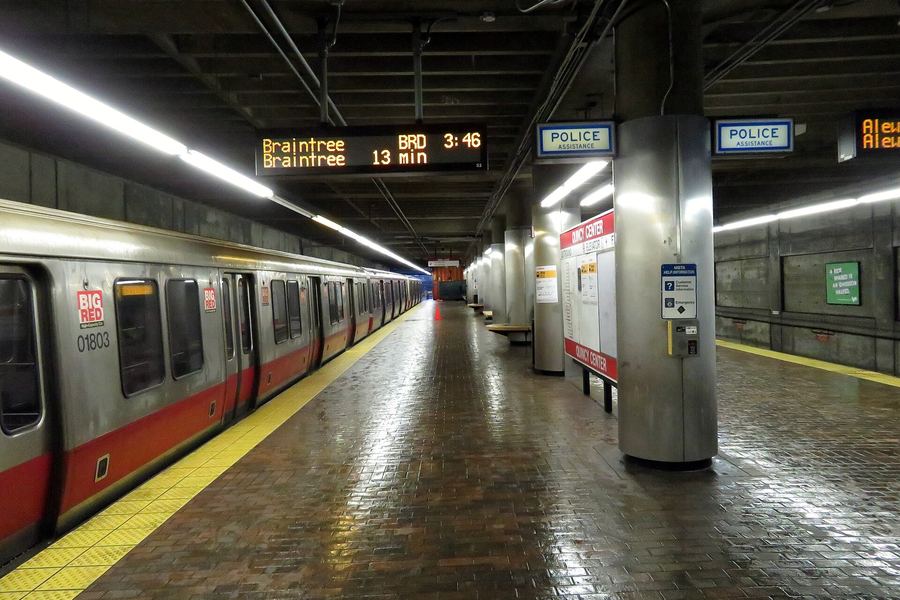
The rental stock ranges from floors of older two- and three-family houses to older apartment buildings near the stations to newer development that has arrived unevenly across the city. Larger units suitable for families are more findable here than in the denser cities to the north, which is a substantial part of the appeal. Proximity to a Red Line stop is the variable that most affects both price and how the commute feels, and it is worth walking rather than estimating. Heating arrangements vary in the older stock, so ask what is included and what a winter month actually costs.
What the rent index can and cannot answer
An observed-rent index describes the level and direction of rents across the city over time. It does not distinguish a one-bedroom near a station from a three-bedroom on a quiet interior street, and it excludes utilities, parking and laundry. Quincy is several neighbourhoods with different characters and prices, and a city-wide index flattens all of them into one line. Read it as a budget sanity check and as a record of how much rents have moved over five years, then price each apartment on what it includes and where it sits.
What a lease asks for, and what a family should confirm
Expect first month, last month and a security deposit to be requested before you receive keys, plus a broker fee where a broker is involved — who pays that depends on who engaged the broker, so establish it before you tour. Landlords will ask for income documentation, references and a credit check. Because this market runs year-round rather than in a rush, you generally have time to read the lease properly: confirm the lease term, what happens at the end of it, who is responsible for heat, snow clearing and appliances, and whether parking is included or charged separately.
Questions
What buyers ask me about this segment
- How is renting in Quincy different from renting in Cambridge?
- Cambridge runs on an academic calendar with most leases turning over on September 1, which compresses choice into a short window. Quincy's renters are working households and families, so apartments come available through the year. You usually get more time to decide and more room to negotiate a start date, and family-sized units are easier to find.
- How much lower is rent here than in the city?
- For August 2026 the observed rent indexes were $2,770 in Quincy, $3,338 in Boston and $3,476 in Cambridge. These are city-wide indexes of observed rents, not asking prices, so they indicate the scale of the gap rather than what a given apartment will ask. What the difference buys varies by neighbourhood and by the apartment itself.
- Should I prioritise being near a station?
- If you will commute into Boston regularly, yes — walking distance to a Red Line platform is what makes the trip reliable in bad weather rather than merely feasible. It usually costs more in rent. If you drive to work instead, that premium buys you something you will not use, and the quieter parts of the city give you more space for the money.
Thinking about Quincy?
Tell me your budget and timing and I will tell you honestly whether this segment fits — and what it would cost you to be wrong about it.