
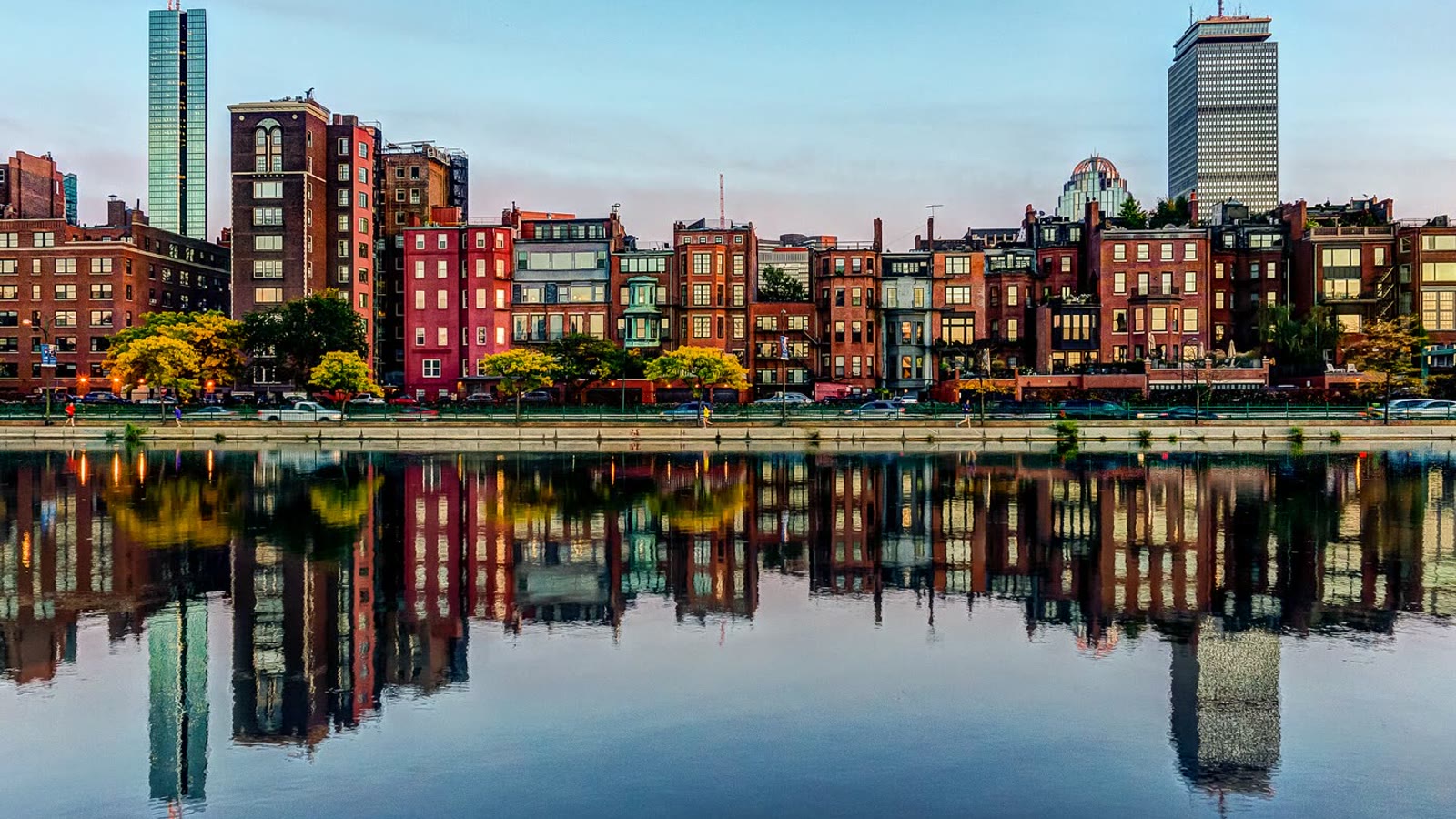
The City of Boston plants street trees twice a year, and the fall round runs October through December. If the sidewalk in front of your house has room, you can ask for one.
What the city plants and where
Boston’s Urban Forestry Division maintains an inventory of almost 40,000 street trees. It plants in the spring, from April through June, and in the fall, from October through December. When a street tree is removed, the city says a New Tree Request is created automatically and it does its best to replant in the next planting season. Where there’s no tree pit, the city’s policy is to have the abutting property owner make the request before it cuts a new pit in the sidewalk. The request page says an owner or resident can make it.
How to ask
Create a New Tree Request case with 311, by app, by phone or online, or call the Urban Forestry Division directly. You can ask for a specific species. The city then sends an arborist to inspect the site. If it’s approved, the request page says the tree will be planted within a year of the case being created, in the spring or in the limited fall planting.
The site rules
The tree has to be 10 feet from any light pole, driveway or hydrant, and 10 to 20 feet from an intersection depending on the direction of traffic. The sidewalk has to be six feet wide, not counting the curb. The tree pit should be at least 24 square feet, preferably four feet by six. The species has to fit the neighborhood with room to grow, the tree can’t interfere with power lines, and the planting can’t sit in front of a building entrance. The city plants only from its own list of species.
Who takes care of it
Street trees in the public right of way belong to the city. Its planting contractor warranties new trees and provides basic maintenance for two years, filling the watering bags every two weeks in warm weather. The city welcomes residents who want to water, and says it isn’t expected of them.
Before you buy a house with a street tree
Street trees are public shade trees under M.G.L. c. 87. Under § 3 of that chapter, nobody but the tree warden or a permit holder may cut or trim one, even the owner of the land it stands on, and taking one down requires a public hearing with notice posted on the tree at least seven days before. The exceptions sit in § 5 of the chapter: the tree warden may act without a hearing on bushes and trees under an inch and a half in diameter, and on trees the mayor or similar officers order cut because they obstruct or endanger travel, and nothing in the chapter prevents removing a tree that endangers travelers, removing one for road widening, or suppressing pests. The city’s page says it can’t remove a living, healthy street tree even when it’s lifting the sidewalk. If you’re buying in Boston this fall and want to know what the city will do for the block, ask me. Diana Kim, REALTOR®, eXp Realty.
Questions
Common questions
How do I request a street tree in Boston?
Create a New Tree Request case through 311, by app, phone or online, or call the city's Urban Forestry Division. If there's no tree pit, the abutting owner or resident has to make the request. You can ask for a species.
When does Boston plant street trees?
In the spring, April through June, and in the fall, October through December. The request page says a limited number go in during the fall, and an approved site gets its tree within a year of the case being created.
Who waters a new street tree?
The city's planting contractor, for the first two years, filling the watering bags every two weeks during warm weather. Residents can help, and the city says it isn't expected.
Can I prune or remove the street tree in front of my house?
No. Under M.G.L. c. 87, § 3 only the tree warden or someone with a written permit may cut or trim a public shade tree, and removal takes a public hearing. The § 5 exceptions cover small trees and bushes, hazards to travel, road widening and pest suppression, and the small-tree one is the tree warden's alone. In Boston that work belongs to the Urban Forestry Division.
Sources
- City of Boston, Urban Forestry (boston.gov/trees), Street Tree Inventory: 'The Urban Forestry Division is working to maintain updated information on the city's almost 40,000 street trees.'
- City of Boston, How to request to have a tree planted on a City street (last updated 8/28/26), Before you get started: 'You can request to have a tree planted in an empty tree pit. If there isn't an existing tree pit, the abutting property owner or resident must be the one to request to have a new tree pit cut in the sidewalk.' Also: 'The tree species needs to fit the neighborhood, and there must be enough space for the tree to grow. The tree cannot interfere with power lines. The planting cannot located in front of a building entrance.' and 'We also only plant certain types of trees.'
- M.G.L. c. 87, § 3: 'Except as provided by section five, public shade trees shall not be cut, trimmed or removed, in whole or in part, by any person other than the tree warden or his deputy, even if he be the owner of the fee in the land on which such tree is situated, except upon a permit in writing from said tree warden, nor shall they be cut down or removed by the tree warden or his deputy or other person without a public hearing and said tree warden or his deputy shall cause a notice of the time and place of such hearing thereof, which shall identify the size, type and location of the shade tree or trees to be cut down or removed, to be posted in two or more public places in the town and upon the tree at least seven days before such hearing'.
- M.G.L. c. 87, § 5, the exception § 3 opens with: 'Tree wardens and their deputies, but no other person, may, without a hearing, trim, cut down or remove trees, less than one and one half inches in diameter one foot from the ground, and bushes, standing in public ways; and, if ordered by the mayor, selectmen, road commissioners or highway surveyor, shall trim or cut down trees and bushes, if the same shall be deemed to obstruct, endanger, hinder or incommode persons traveling thereon ... Nothing contained in this chapter shall prevent the trimming, cutting or removal of any tree which endangers persons traveling on a highway, or the removal of any tree, if so ordered by the proper officers for the purpose of widening the highway and nothing herein contained shall interfere with the suppression of pests declared to be public nuisances'.
Written by Diana Yeji Kim — REALTOR® at eXp Realty, serving Greater Boston in English, Korean, and Japanese.
← All articles